Tuesday, November 1, 2011

What it means to have curly hair

I was dead serious when I asked a certain Mr. R, “Mr. R. what’s your opinion of curly hair?”
What was his opinion? Was he going to pause before he answered? I hoped to God he would never pause because a million little things can be said in the silence of a single pause that can have devastating consequences for a relationship. Why, you might ask, was this question so important that my possible future fiance’s unknown future hung in the balance?

Like Copperfield, I will begin at the beginning.

I was born. And when I was born, I let out such a cry, mum tells me, that the minute she heard it, she knew I was going to be trouble. Then she saw the mop of curls I was born with and thought to herself (and I’m paraphrasing here) paramatma, this child is going to be just like the rest of the Kalgudi family. Apparently, this was not the compliment my grandma, her mother-in-law, thought it to be. We, of the Kalgudi family, are not exactly your run-of-the-mill ordinary creatures, according to mum, and she wondered how she would cope with another one coming into the world.

Our women, my grandma Ajji has always told me, are known for their stubborn hair. It runs in our genes, she says. My youngest aunt, the great beauty of the family, could not escape it. And now, even my grandma’s great granddaughter, offspring of a Kalgudi, has it. When I was a child living with Ajji, it was a routine every Sunday that my hair was brushed and oiled thoroughly before being washed. At least once a week, you should oil your hair. That’s what I was told. And even today, when I visit her, she sits me down to brush my hair and tells me that I should always oil it. Once a week. Without fail. My Ajji has always emphasized on the custom and tradition of our ways, lest I forget my true roots.

At the tender age of 7 when I left India to join my parents abroad, mum chopped my hair off. Her reason?
“I don’t want to sit there brushing all those curls out.” So every time they grew two inches too long, it was off to the hairdresser’s for a nice good chop. I see myself now, in those primary school pictures, a distinctly black mop of curls surrounded by blond and auburn hair, steadfastly refusing to fit in with its gentle surroundings.

I can’t remember when exactly my curls became entangled in my sense of identity. It might have been the time dad’s idiotic friend described me as ‘the girl with the big hair’ or the time I had a huge fight with mum to grow them back or the time I did grow them back and then decided to chop them off in a fit of frustration during my O’Levels, much to the shock of all my classmates. I just know that without being consciously aware of it, I began to wish I had straight, silky hair. I didn’t want to be this person anymore. When I took up swimming it wouldn’t fit in the swimming cap. When I decided to try out different hairstyles, the hairdresser told me very politely that nothing much could be done. I was tired of waking up in the morning and wondering what my hair was up to. The older I grew, the more complicated and messy it became. Life became convoluted and messy, intricate and labyrinthine, complex and confused.

By the time I came back to India, I didn’t know who I was. Ajji’s customs and traditions were forgotten. I determined to straighten my hair. Permanently. But there was a problem. My family places great emphasis on natural beauty. Random relatives were perplexed by my choices and chose to voice their opinions. Why would I want be something so unnatural when I had the best of everything? I guess you could say I was confused. I was trying to understand India at the time and our country has that effect on people. She takes you by the collar, shakes you and asks you exactly what you think of yourself. And I thought my hair needed to be straight.

I straightened it and it looked fantastic for a week, even two weeks. But you could tell the strain it was under, trying so hard to stay straight. It didn’t last very long. I went to numerous hairdressers, took many different paths to find what I was looking for. Nothing changed. When I tried to have it ironed, smoke rose out of it. My cousin and I (she suffers a similar fate) used to discuss shampoos on a regular basis, trying new brands, experimenting with different methods. No change. I experimented with banana and beer. All I learnt was that picking bits of banana out of your hair for hours makes you suicidal and beer is better in your belly than on your hair. I explored more traditional routes and tried shikaykai and tulsi. I tried amla and henna and blah blah blah. I even walked around smelling like rotten eggs for a day. It’s all a blur now.

Slowly, I grew disgusted with all those ridiculous women in TV ads who could run a comb through their hair and have it slide down with no effort at all. I started to curse girls walking around with flowing silky hair. I tried to be polite and kind to people with nice hair, the way mum raised me, but I couldn’t.

Then I swore that my future husband, who ever he was, would have to be a lover of curls. Because my hair would not become straight. And he must know this fact, embrace it and love it, even if I never did.

So you see, all those things were rushing through my mind in the instant that I casually asked my Mr. R. what he thought of curly hair. And now for the question of a lifetime. Did he pause?
No.
He said, with no pause at all, ‘I love your hair. And I always will.’
I had to make sure he understood the implications of his statement.
“Are you sure you know what you’re in for? Kalgudi hair can be complicated,” I said.
“Of course I do!” he replied. Again, with no pause.
I searched his face intently. He held my gaze steadfastly. It appeared Mr. R. was sure he could handle curly hair.

I guess that’s the moment I really started to let go and embrace things as they were. Just exactly as they were. No chemicals and no changes. No more trying to be something other than what I am.

It’s the weirdest thing in the world, but I swear it has gotten better with the passing seasons. Sure, I occasionally make the 1 hour international phone call to discuss my hair issues with Mr. R., but such calls are now fewer and farther in between. It’s still stressful when the time comes for new things, and I know I must change shampoos, but such times grow less and less worrisome. And through it all, or rather because of it, I have learnt to love my hair.




Sunday, March 27, 2011

India doesn't need a sexual revolution

India doesn’t need a sexual revolution. And patriotism isn’t about supporting the Indian cricket team. We just need to stop pouring acid on unformed foetuses of baby girls and bashing their bones to smithereens to hide the evidence.

Did you know that according to a recent survey female foeticide was highest among women with university degrees?

They give them to street sweepers to be disposed of like garbage. They tell them to catch rickshaws that go by riversides and throw them into the water. The doctors tell them this.

Of course there will be a skewed sex ratio! And when there aren’t enough child girls for them to marry as brides they traffic them from other states. Yes folks! We have brides for sale in India. All you need is RS. 10,000 or $222. So if I go Sunday shopping twice, I could buy a bride. And so could you!

I want to rattle the bars of those caged minds and scream! Whatever happened to our ‘lovely Indian culture’? Are we all insane?

People turn blind eyes to this. WE INDIANS turn blind eyes to this. Because if it doesn’t affect you, why should you be bothered right? Why should you be bothered at all?

Maybe if you have ten minutes to spare, you’ll find the time to educate yourself about this: http://www.buzzle.com/articles/129103.html (Guardian News & media, published '07).

But wait, don’t you have that cricket match to worry about? Isn’t that the most important thing in the world? So what if in some state of your country they’re mashing a baby foetus' bones (some of them developed enough to be legally called babies by Indian law)? As for me, I don’t give a damn about the cricket match. And I’m angry as hell.

I'm not even going to apologize for my harsh tone. Like I said, I’m angry as hell. And if you're not after reading that article, then you're just plain weird. Oh but wait, maybe you're just turning a blind eye. I'm so sorry...didn't mean to make you see. Carry on. Turn that blind eye.

Thursday, March 3, 2011

A lady I met in my travels


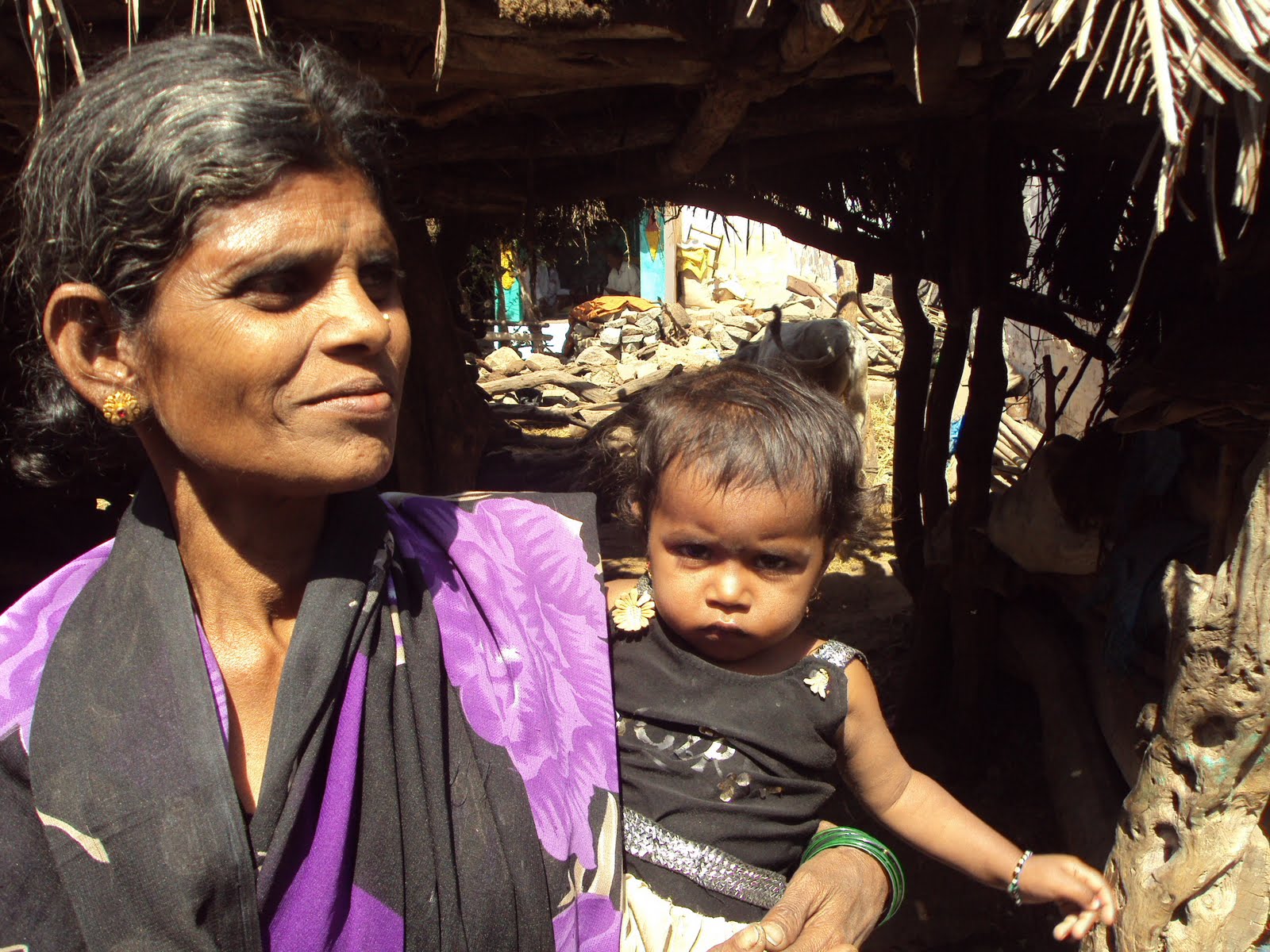
When I first saw Huliamma, she’d come to a school I was visiting to collect a transfer certificate for Lakshmi, her 16 year old daughter, who’d dropped out of the education system a year before in order to get married. She didn’t know her own age or how old she might have been when she herself had an arranged married. If she had to guess, Huliamma said, she was probably around 35 years. But then I asked her the age of her eldest child, and she said with fair certainty that her son, Hulgappa, was around 25.

Now, taking into account the average age that women of her generation and social class were married in Bellary District of the State of Karnataka, India, it was possible to make an educated guess as to her real age. Many of the women I’ve spoken to were married around the age of 14 or 15. They usually had their first child when they were 16 going on 17 and they were almost always uneducated, without any basic literacy or arithmetic skills. Not surprising. Adults in South Asia have, on average, completed only 4.5 years of schooling according to a UN report. If Huliamma’s eldest child, Hulgappa, was around 25, then that would place her age between 40 and 45 years.

Only 40 years and she was the mother of 6 children and the grandmother of one baby girl. Both her daughters were already married. Hulggiamma, her eldest daughter, was only 20 years old. And she was pregnant with her second child.

“Girls still marry at a very early age around here. We try and tell them not to marry them off so soon, but they won’t listen. That’s how it’s always been,” says Renuka, a teacher in the village.

The weather-beaten contours of Huliamma’s face appeared much older than 40. They hinted at decades of hard labour in the unforgiving Bellary sun. She’d been working since she was 13, she said. They were field workers. Gaddi kelsa was their way of living. And life was tough. If it wasn’t the heavy rains, then it was the severe shortage of them during dry seasons that constantly added to their troubles. But agriculture was their only source of income and they had a lot of mouths to feed.

On average, field workers get paid between Rs. 150 to Rs. 200 per day around Bellary. That’s around US $3 to $4. The cost of a kilo of rice in Karnataka is around Rs. 40. Average cost of a kilo of dal: Rs. 60. It’s fair to say that it costs at least Rs.100 for a large family like Huliamma to eat a simple meal of rice and sambar three times a day. Where is there money left for anything else?


A few hundred meters from the main highway that threads through all the surrounding villages like a string to so many pearls, was Huliamma’s home. Five feet from her doorstep, in the cool shade of a thatched roof shed, buffalo lay resting.

Coming from the concrete jungle that is Bangalore, I was touched to see such civil pastoral simplicity. What was even more touching was the close knit sense of community that wrapped around me as I sat down at her doorstep. All her neighbours came out to see their new visitor, come all the way from the big City. And for a brief moment, I felt I was a part of her life and her village. In that moment, I also felt trapped and powerless. What would I do if I couldn’t write?

Huliamma was staying home these days, because of Shivappa, her 18 year old son. Shivappa was sitting in front of the family house, one swollen leg wrapped in a towel, his emaciated form showing clear signs of chronic distress. He’d been cycling when he fell into a ditch months ago. They weren’t sure what was wrong with his leg.

“We went everywhere, from Bellary, to Hospet to Bangalore, but nothing happened. We spent nearly Rs. 150, 000 but no one did anything,” said Huliamma.

When I asked her which hospital in Bangalore they took her son to, she responded, “I don’t know. I’m a woman, how will I know these things? Our work is just cooking and cleaning. The men will know,” she said. So Shivappa was still suffering, with his left leg swollen and bandaged in a towel. And as an uneducated mother, she was powerless to do anything about it.

I’ve read so many statistics about the need to educate and empower women. How an educated mother will improve the quality of life for her children. How an empowered woman will have the means to sustain her family through difficult times. I think this is the first time that it really hit home.

I know it won’t be the last time. There are hundreds of thousands in the world like her. I’ll read another article in the newspaper tomorrow on the plight of women the world over. It’ll be written with an ‘angle’ on human development and have oh so many facts and figures that show just what a shame it is no one’s doing anything about it. The story will be right next to the latest scam on Government corruption, after the all important news on the latest superstar gossip.

But for people like Huliamma, this is their life. She has to get up the next day and go about her household chores. She has to tend to her son and ease his suffering. She has to find a way to cook three meals a day on whatever can be afforded. At least her daughters can read and write. Maybe her granddaughters will do much more.

When I read about this competition by Dove on the beauty of a woman, I was so happy because it gave me the opportunity to show others how amazing we women are through Huliamma's story. I thought of her immediately. For me, this is the true beauty of a woman: our ability to face life head on, despite the trials we have faced, despite the pain we have suffered, just like Huliamma does everyday. We find a way to get up each day and deal with everything that comes our way with a quite fortitude unmatched in any man I've ever come across. I see it in my mother's eyes, I see it in my Ajji's careworn features. I saw it Huliamma. And one day, I hope to see it in myself.


Monday, March 29, 2010

restless souls

stuck in the middle of traffic, i asked my colleague R* why she was in the social sector. When you're stuck in the middle of traffic, you'll ask anyone just about anything. its the god damn traffic.
Why are you in the social sector R*?
because, she said (and i'm paraphrasing here), i got sick of my old job. I'm a little restless that way.

a restless soul. like me.

Some people in this world are lucky. they were born in just the right place, at the right time, and they never struggle with themselves. they were, are, and always will be exactly suited to their life and place in this world.

then there are others. others like me. restless souls. wandering through here and there, never fitting anywhere, not even in the skin of their own existence. i remember being 13 and looking in the mirror. first time i asked my eyes to explain the meaning of their look. first time that iris brown turned to mystery and confusion.

and i wandered and wandered through the days and found nothing but confusion everywhere i looked. sometimes in that iris brown shining through the mirror...sometimes in the iris brown of others..or iris blue or iris green.

i gave up at one point. that misty haze of life would never clear, the sun would never shine. darkness was all i had and i should get comfortable with it. or so i thought....so i beleived.

until someone came along who looked right through the iris brown and saw me.
just as i am. no putting on a pedestal. no seeing a me that doesn't exist.

through the meandering path we wander together.

i am restless no more.

Saturday, March 6, 2010

my first job ever

poonam said over her chapati at lunch that they were looking for someone in communications.
Communications? i asked.
Yes. communications.
Why don't you speak to priti about it?

and then Pavi came up to me and said so too. speak to priti about it, she said. kalpana had asked her to ask me to speak to priti about it.

and then priti came up to me, before i could go up to her, and said...we're looking for someone in communications.
i said oh? communications?
she said yes. and event management, and fundraising.
hmmm.. i said.
then priti started to tell me what it meant to be in communications. priti with the full weight of her 30 yrs of experience.
and by the time she was done, i was almost convinced.

but i had to speak to kalpana first. and by the time she was done, i was totally convinced.

so there you are. i landed my first job in the social sector as a paid intern. which may not sound like much, but its better than an unpaid intern. from now on, i'm officially saving the world, one little child at a time. through life skills. and communications. also, event management.
isn't that cool? i think so.

dad, however, thinks i'm wasting my talent. i should be in corporate, saving myself. making my money. god knows you're talented anu, why are you throwing it all away?

he has a point, though i'll never admit that to him. he has a point, no doubt. but then i have i point too.

and my point begins with a painted tree. several trees in fact. it was a hot saturday. the indian summer was on. i was smelling of turpentine bananas and delicious paint. it was a small classroom for the littlest children in the school. and it was filled with perfect strangers.

perfect because they were new. and new people are always perfect. with them, there is no familiarity that has bred contempt.

we all painted a wall. with trees. and flowers, and happy loitering clouds. i was putting the grey in the clouds when i made up my mind to save the world.

besides, i'll find the money somehow. i'm going to be a bestselling author remember?

Sunday, February 28, 2010

my very first blog ever

And hello to the world. there's one sad thing about the 21st century. i have nothing to say that hasn't already been said.

so it's really a healthy sense of narcissism that's making me do this. Yes, i'm smart. Yes, i have a hell of a lot to say. and guess what? maybe you will read it and be inspired. maybe even outraged. I'm just one faceless, semi-anonymous voice in the world but damn it, i WILL have my say (Even if it is for a brief pointless moment) and somebody out there is going to listen.

so here i am. and there you are. sitting somewhere in a corner of the world that i may know nothing about, completely different from me and everything that i am, reading into me with a stranger's eye and getting out of it what you will.

Somewhere along the way, i just might say one thing, among a million things that i'm going to say and those words might change your life in a small way (or so i hope). And when that happens, though i may never know it, my dream will have come true.

I start this blog for my grandmother. I'm sorry you lost your brother Avva. And I dedicate this blog to all the people who are suddenly confronted with their own mortality. life is fragile and death is certain.

So carpe diem, dear friends.